
Equity indices made an emphatic comeback on Friday after falling for seven straight sessions after the RBI hiked interest rates by 50 basis points on expected lines and projected inflation coming under control from January next year. A strong recovery in the rupee added to the momentum, traders said. Overcoming a wobbly start, the 30-share BSE Sensex soared 1,016.96 points or 1.80 per cent to settle at 57,426.92. During the day, it rallied 1,312.67 points or 2.32 per cent to 57,722.63.

The bulk of the incremental profits will come from oil & gas and automobile sectors.
The adverse impact on the margins of auto, consumer staples and consumer durables sectors will be counterbalanced by an earnings uptick in the metals, cement and oil & gas sectors.

Sliding for the fourth straight day, the BSE Sensex shed 152 points in choppy trade on Wednesday amid mixed global cues ahead of the US Federal Reserve's policy decision.

The third-quarter financials didn't excite market watchers. But equity investors can still make money if they invest in the right stocks.

Telecom operator Bharti Airtel and IT major Tata Consultancy Services (TCS) have joined hands to build a 5G-based remote working technology using robotics, according to a joint statement. TCS during the trials has successfully tested two use cases of its Neural Manufacturing solutions on Airtel's 5G testbed in Manesar - remote robotics operations, and vision-based quality inspection, the statement claimed. "The 5G ecosystem will open limitless possibilities for enterprises to enhance productivity and serve their customers even better with digitally enabled applications.

Market benchmarks gave up intra-day gains to close in the red for the sixth session on the trot on Friday, capping a bruising week which saw a massive dash for safety amid rate hikes by global central banks and fears of slowing growth.

Market benchmark Sensex tumbled over 323 points after an intense last-hour sell-off on Wednesday, triggered by losses mainly in index heavyweights Infosys, Reliance and HDFC.
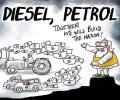
The government on Friday slapped an export tax on petrol, diesel and jet fuel (ATF) while also joining nations like the UK in imposing a windfall tax on crude oil produced locally. A Rs 6 per litre tax on export of petrol and ATF and Rs 13 per litre tax on export of diesel is effective from July 1, finance ministry notifications showed. Additionally, a Rs 23,250 per tonne tax was levied on crude oil produced domestically.

Consumer stocks remain the biggest laggard on the bourses. The Nify50 weighting of FMCG stocks declined to a decade low of 9.9 per cent at the end of March this year, down 150 basis points from 11.4 per cent a year ago. At their peak in March 2013, major FMCG stocks, such as Hindustan Unilever, ITC, and Asian Paints, together accounted for 15 per cent of the Nifty50. But now together with automobile stocks, the consumer goods sector accounts for only 14.7 per cent of the index, down 200 basis points in the past 12 months and 37 per cent from the record high weighting of 23.4 per cent at the end of March 2014.
The 30-share bluechip index is rebalanced on a semi-annual basis with next rejig slated for June 18.

The government has lost its appeal in the English High Court against a $111 million arbitration award in favour of Reliance Industries Ltd and Shell in a cost recovery dispute in the western offshore Panna-Mukta and Tapti oil and gas fields. High Court judge Ross Cranston on June 9, 2022 ruled that the government should have brought its objections over the arbitration tribunal not meeting the required thresholds, when issuing the 2021 award earlier, two sources with knowledge of the matter said. Rejecting the government's arguments, the court said the objections are barred by an English law principle whereby a party cannot raise matters in new proceedings that could have been raised in earlier proceedings.

In the Sensex pack, Yes bank emerged as the biggest loser, falling 9.13 per cent, followed by IndusInd Bank (6.6 per cent), HeroMotoCorp (6.01 per cent), Sun Pharma (4.79 per cent) and SBI (4.70 per cent).
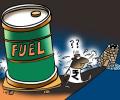
The windfall tax on oil produced within India and fuel exported overseas will make up for more than three-fourths of the revenue that the government lost when it cut excise duty on petrol and diesel to cool soaring inflation, industry sources said. India on July 1 joined a select league of nations globally that have taxed windfall gains accruing to oil companies from soaring energy prices. The government slapped a Rs 6 per litre tax on the export of petrol and jet fuel (ATF) and Rs 13 a litre on the export of diesel effective July 1. Additionally, a Rs 23,250 per tonne tax was levied on crude oil produced domestically.

Banking and financial stocks got more than their fair share of foreign portfolio investor (FPI) flows in February. Overseas investors pumped in $3.56 billion into domestic equities last month. Of this $1.96 billion went into financial stocks, data analysed by Edelweiss shows. "The sector now has 34.8 per cent of FPI assets, up from 33.8 per cent in January.

The operating margin of India Inc is likely to drop in the December quarter with a 100-120 bps year-on-year decline, as 27/40 sectors are set to see crimped margins despite higher revenue, according to a report. Surging commodity prices and price hikes may help companies report a healthy 16-17 per cent revenue growth to Rs 9.1 lakh crore during the quarter ending December, the Crisil report said on Tuesday. Software major TCS will open the earnings season Wednesday.

Dilip Shanghvi's Sun Oil & Natural Gas, signed a deal for the transfer of Interlink Petroleum's interest in the Modhera and Baola fields.

The Tata group companies are now more valuable than all the listed central public sector undertakings (CPSUs) or companies in the country. The key 20 listed Tata companies ended the 2021 calendar year with a combined market capitalisation of Rs 23.36 trillion, ahead of the 70 listed CPSUs, which had a combined m-cap of Rs 23.2 trillion. In comparison, these CPSUs had a combined market capitalisation of Rs 16.7 trillion at the end of December 2020 against the Tata group firms' combined m-cap of Rs 15.7 trillion.

Tata Sons stake in the group's listed companies is now worth Rs 9.28 trillion, up 34.4 per cent on a year-on-year (YoY) basis. In comparison, the Government of India's stake in listed central public sector undertakings (PSUs) is currently valued at Rs 9.24 trillion
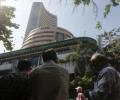
Stocks of IT, power, healthcare, capital goods, oil & gas, banking and auto were the major drivers.

Gains in realty, teck, IT, power, consumer durables, banking and oil & gas stocks helped both the key indices to score gains.

Market benchmark BSE Sensex declined over 247 points on Tuesday to close at 40,239 as heavy selling emerged mainly in power, oil & gas and IT stocks amid a strengthening rupee. Yes Bank was the biggest loser in the Sensex pack with 10.05 per cent fall, followed by PowerGrid, IndusInd Bank, NTPC, ITC, TCS, Axis Bank, Hero MotoCorp, M&M and HCL Tech, which lost up to 2.66 per cent. On the other hand, Bajaj Finance, HUL, HDFC Bank, ICICI Bank, and Bajaj Auto gained up to 1.06 per cent.

Among the Sensex stocks, HDFC emerged as the top gainer, rising by 2.06 per cent, followed by Axis Bank, Maruti, Reliance, Power Grid and Tata Steel.
New products being designed mainly for auto, oil & gas sectors; firm is raising Kalinganagar plant capacity from three mtpa to eight mtpa

The share of public sector undertakings (PSUs) in the total market capitalisation of listed companies--at an all-time low of 10 per cent currently --- may get a leg-up from the government's divestment push. Recently the government announced the successful sale of national carrier Air India to Tata Sons, India's first privatisation of a PSU since 2002-03. The transaction is expected to be completed by December.
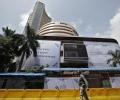
Gains were led by realty, auto, capital goods, banking, infrastructure, metals, power, oil & gas, PSU and consumer durables sectors, which rose up to 3.30 per cent.

Reliance was the top gainer in the Sensex pack, surging over 3 per cent, followed by ICICI Bank, Bharti Airtel, Dr Reddy, Maruti and ITC.

Reliance Industries on Friday reported a 41.5 per cent jump in its third quarter net profit as oil, retail and telecom businesses fired on all cylinders. Net profit of Rs 18,549 crore in October-December compared with Rs 13,101 crore a year back, the company said in a stock exchange filing. Income from operations rose to Rs 1.91 lakh crore from Rs 1.28 lakh crore.

Around 75 per cent, or 372 stocks, that are part of the BSE500 are trading at least 10 per cent below their all-time high levels, despite the index hitting a record high 20,515 points on the BSE in intra-day trade on Wednesday, surpassing its previous high of 20,390 touched in March 12. The index, which accounts for 93 per cent of BSE listed companies' market capitalisation, has gained 8 per cent from its recent low of 18,983, touched on April 19. In comparison, the benchmark S&P BSE Sensex gained 6 per cent over the same period, but is still nearly 4.5 per cent away from its all-time high of 52,517 that it hit on February 16.

Oil and gas exploration policy will be reviewed to move from profit sharing to revenue sharing contracts.

Petroleum Minister Dharmendra Pradhan was to give away the awards but he could not attend because he was travelling.

Foreign portfolio investors (FPIs) have pumped in a whopping $33.8 billion into domestic equities and debt till February 15 this fiscal year -- the highest since FY15 when it was nearly $46 billion --taking their net outstanding investments to a record $592.5 billion, as per a report. Of the total FPI assets of $592.5 billion, $537.4 billion were in equities and $51.38 billion in debt, according to the data collated by Care Ratings. The maximum holding is in financial services sector at $191.3 billion, followed by software ($76.1 billion), oil & gas ($50 billion), automobiles & auto components ($26.9 billion, pharmaceuticals & biotechnology ($22.8 billion), sovereign ($21.7 billion--debt), household & personal products ($20.2 billion), capital goods ($19.8 billion), food, beverages & tobacco ($15.7 billion) and insurance ($13.4 billion).

After swinging nearly 330 points, BSE Sensex finished 172.69 points or 0.43 per cent higher at 40,412.57. Similarly, the 50-scrip NSE Nifty appreciated 53.35 points or 0.45 per cent to close at 11,910.15.
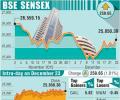

'Companies with a strong business case and healthy balance-sheet should sail through and emerge more robust in the future.'

India Inc's quarterly net profit reached a record high of Rs 1.64 trillion in the third quarter ended December 31, 2020, mainly due to gains from higher commodity prices and a big swing in banks' earnings. The combined net profit of 3,323 listed companies that have declared results so far was up 68.6 per cent year-on-year (YoY). In comparison, earnings were up six times (534 per cent) in the second quarter and 6.5 per cent in the corresponding period last year.

Markets

At the same time, the Cabinet approved reducing government's stake in select PSUs such as IOC to below 51 per cent while continuing to retain management control.

Christopher Wood, global head of equity strategy at Jefferies reiterate his bullish view on Indian equities on the back of a steady fall in Covid cases coupled with a sharp economic recovery in India, reports Puneet Wadhwa.
 © 2026 Rediff.com - Advertise with us - Disclaimer - Privacy Policy - Sitemap - Feedback - About us - Terms of use - Grievances